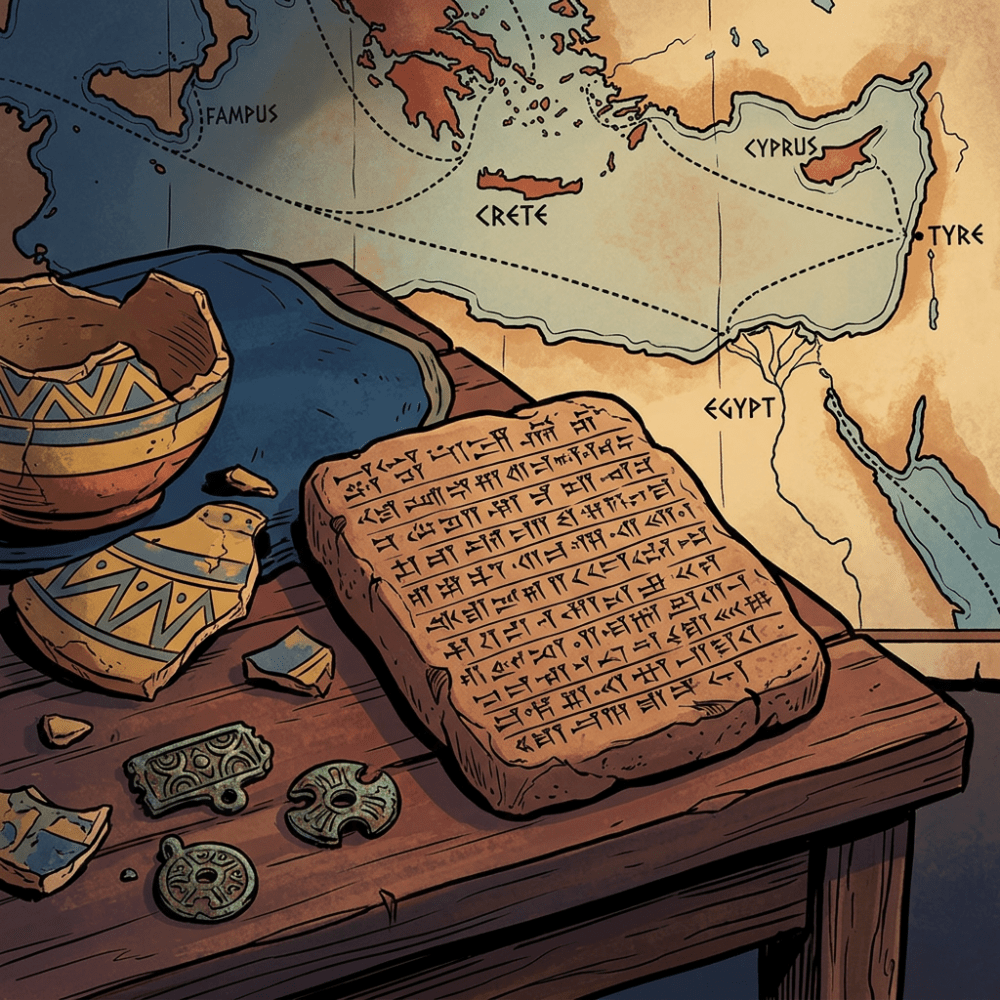

The image of a pirate with a wooden leg, a sword and a black flag belongs mainly to the 17th and 18th centuries. Piracy, however, is far older. One of the oldest surviving written accounts takes us back to about 1350 BC and, strikingly, is directly connected with Cyprus.
Long before Blackbeard and the pirates of the Caribbean, seaborne raiders were plundering the eastern Mediterranean, and ancient Cyprus was already at the centre of events.
The information comes from the famous Amarna Letters, diplomatic correspondence between Egypt and rulers of the eastern Mediterranean.
Learn (in Greek): Grivas: the etymology of the word
The king of Cyprus apologises to the Pharaoh
In letter EA 38, the king of Alashiya, widely identified with Cyprus, replies to the king of Egypt. The Egyptian ruler appears to have accused people from Alashiya of taking part in raids alongside the Lukka.
The Cypriot king denies the accusation and puts forward a striking argument: the Lukka themselves, he writes, “take villages in my country every year”.
The Lukka are associated with areas of south-western Asia Minor. Historians regard their raids as part of the very early history of maritime predation in the eastern Mediterranean.
That does not mean piracy was born in 1350 BC. The practice is probably as old as organised sea trade itself. This particular letter matters because it gives us written evidence that such raids were already a serious political and economic problem.
Did you know? Visit Palaepaphos to… see the Odyssey (in Greek)
From the Mediterranean to the Caribbean
Over the centuries that followed, piracy appeared across the known world. In antiquity, it became an especially serious problem in the Aegean and the eastern Mediterranean. In the 1st century BC, the so-called Cilician pirates became so powerful that Rome gave Pompey extraordinary powers to suppress them in 67 BC.
Centuries later, pirates and privateers operated from North Africa to the Indian Ocean and the South China Sea. The famous “Golden Age” of the Caribbean came much later, chiefly from the late 17th century to the first decades of the 18th.
And piracy belongs not only to the past. On 24 August 2026, the International Maritime Organization warned of a renewed surge in the Gulf of Aden. It reported that six vessels were being held by pirates or armed robbers, with more than 90 seafarers in captivity.
After about 3,400 years, the phenomenon recorded in the letters of ancient Cyprus therefore still exists.
Some of the oldest known evidence dates from the 14th century BC and the Amarna Letters.
Alashiya was an important Late Bronze Age kingdom and is now widely identified by scholars with Cyprus.
They were population groups associated with south-western Asia Minor and mentioned in Egyptian and Hittite sources.
Yes. The IMO continues to record attacks, especially in areas such as the Gulf of Aden, Somalia, the Indian Ocean, and the Straits of Malacca and Singapore.
Related (in Greek): Jolly Roger: Why the pirates’ skull-and-crossbones could save your life
Discover more from Agora Περιοδικό
Subscribe to get the latest posts sent to your email.