When Better Call Saul was announced, the idea seemed almost dangerous. How could anyone make a spin-off of Breaking Bad, already a landmark television drama, without turning its success into a cheap imitation?
Vince Gilligan and Peter Gould chose an answer that was simple and extraordinarily difficult: they did not try to recreate Breaking Bad. They made something different and, in some respects, something even better.
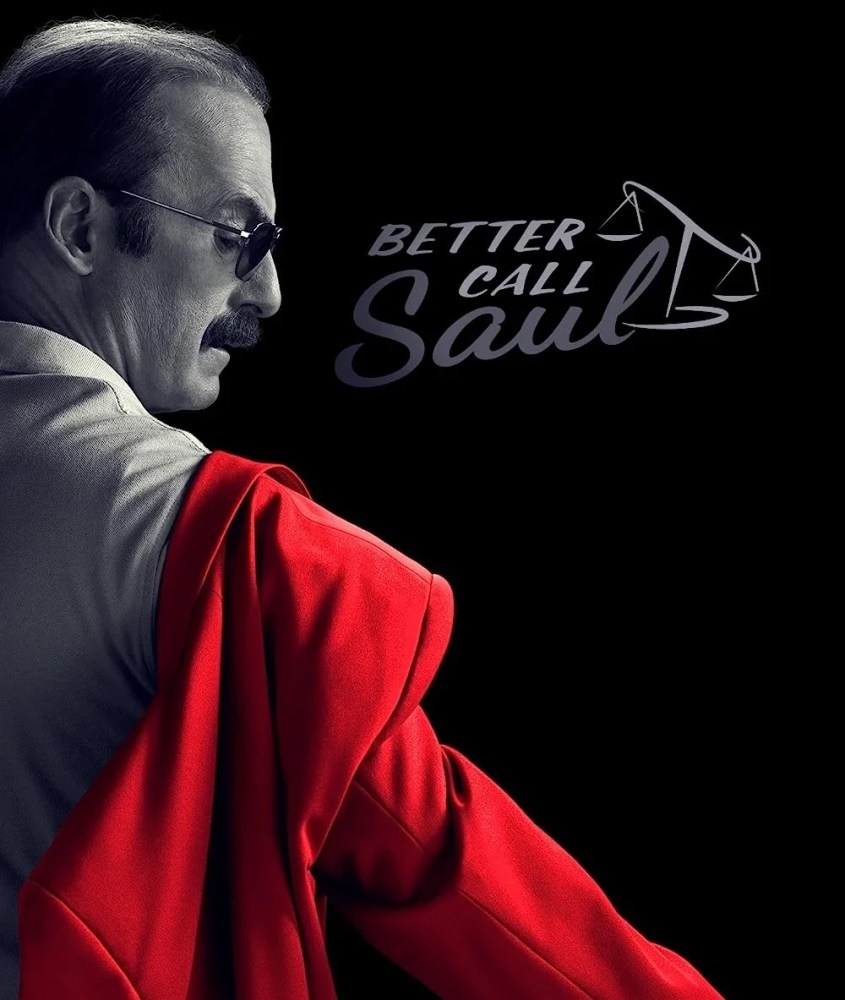
Premiering in 2015 and concluding with its sixth season, Better Call Saul traces Jimmy McGill’s transformation into the Saul Goodman we met in Breaking Bad. Bob Odenkirk plays the central role.
Bob Odenkirk gives the performance of his life
The Saul Goodman of Breaking Bad was funny, ruthless, talkative and flamboyant, often a source of black comedy in an increasingly dark world. Jimmy McGill is something else entirely. You want to save him even as you see him doing everything he can to destroy himself.
This is where Odenkirk excels. A glance, a shift in his voice or a smile held a second too long can turn Jimmy from comic to tragic. We know where he will end up and still hope he might escape that fate.
We are not watching someone suddenly turn “bad”. We watch hundreds of small choices, disappointments, compromises, lies and wounds slowly shape a different person. Saul Goodman does not simply appear. He is built. It is one of the finest character studies American television has produced.
Kim Wexler is far more than the leading man’s partner
Then there is Rhea Seehorn. Kim Wexler might have been written as Jimmy’s moral counterweight or predictable love interest. Instead, she becomes one of modern television’s most complex female characters: intelligent, disciplined, ambitious, reserved, independent and full of contradictions. She has a story of her own.
Seehorn’s performance is remarkably controlled. She needs no grand speeches; her face often does the work. As the series develops, Jimmy and Kim’s relationship becomes its emotional heart. They love one another deeply, yet each can be profoundly dangerous to the other.
And then there is Mike
Jonathan Banks is wonderful as Mike Ehrmantraut. The taciturn figure from Breaking Bad gains a past, guilt, principles and a peculiar moral code. Although we already know the fate of several characters, the series still creates suspense. You know the future and dread every step towards it.
Giancarlo Esposito remains chillingly composed as Gus Fring. Michael Mando and Tony Dalton give Nacho Varga and Lalo Salamanca a life of their own. Patrick Fabian and Michael McKean are also crucial presences in Jimmy’s story.
A series brave enough to move slowly
At a time when many shows seem afraid their viewers will reach for a phone if nothing happens for thirty seconds, Better Call Saul takes its time. It can spend minutes on someone opening an envelope, driving, staring at a wall or waiting. Somehow, you cannot look away.
Nothing is truly accidental. Direction, framing, shadows, colour, spaces and the actors’ positions within a shot keep telling the story. In some episodes, you could almost remove the dialogue and still understand what the characters feel. This is cinema of the highest calibre stretched across six seasons.
Breaking Bad had more fireworks; Better Call Saul has more soul
The comparison is inevitable. Breaking Bad probably has greater urgency and more action, with a plot that accelerates towards disaster. Better Call Saul is more mature, more patient, more melancholy and perhaps more human.
Walter White undergoes a spectacular transformation. Jimmy McGill comes apart almost imperceptibly. The gradual nature of his downfall makes it more painful. The series is less interested in “what happens next?” than in “why did this man become who he became?” The answer is never easy.
The great Emmy paradox
According to the Television Academy, the series received 53 Emmy nominations, including repeated nominations for outstanding drama, Odenkirk, Seehorn and its writing. It did not win a single one. Awards may fade from memory; great series do not.
An ending worthy of the journey
Most of all, Better Call Saul knows how to end. Without giving anything away, its final season does not rely on cheap twists. It does something harder: it completes a character. The creators and AMC presented season six as the end of Jimmy’s path towards Saul and of his complicated relationship with Kim.
When the credits roll, it becomes clear that the six seasons were never chiefly about lawyers, criminals or cartels. They were about choices, the people we might have become, the moments when we could have taken another road and did not, and love, guilt, self-destruction and responsibility.
Read also (in Greek): The Gentlemen on Netflix
The verdict
Better Call Saul began in the shadow of Breaking Bad (in Greek). By the end, it had made a name entirely its own. There is a strong case that, as a complete work, it is more mature, finely wrought and emotionally complex than its celebrated predecessor.
Odenkirk is extraordinary. Seehorn is devastating. Banks is faultless. The writing is precise, and the cinematography and direction reach a level few television productions approach.
Above all, the series respects its audience. It does not explain everything, tell you when to feel moved or rush to impress. It asks you to look closely and rewards every minute you give it.
It is more than a great spin-off or a great series. It is one of the defining television dramas of our time.
Agora rating: 10/10
TV Agora: All reviews and recommendations
Frequently asked questions
Do I need to watch Breaking Bad before Better Call Saul? Not necessarily. Better Call Saul works as a story in its own right, though knowing Breaking Bad adds layers to its characters, events and details.
Is Better Call Saul better than Breaking Bad? They are different shows. Breaking Bad is more explosive and suspenseful; Better Call Saul is slower, more psychological and more focused on character. As a character study, it may reach even greater heights.
How many seasons does Better Call Saul have? The series concluded after six seasons.
Who is the central character? Bob Odenkirk plays Jimmy McGill, who gradually becomes Saul Goodman. Rhea Seehorn’s Kim Wexler is equally vital to the story.
Discover more from Agora Περιοδικό
Subscribe to get the latest posts sent to your email.