Humans stand out above all for language, abstract thought, long-term planning and cumulative knowledge. We do not simply make tools; we teach others how to make them and improve technologies created by people we never knew.
The chimpanzee comes very close to us in its understanding of the physical world. It uses tools, understands cause and effect, and can display exceptional visual memory. A Max Planck experiment found that two-and-a-half-year-old children and chimpanzees achieved similar results in many tests of their understanding of the physical world, but the children performed significantly better in social cognition.
Find out more: Humans and Neanderthals were like wolves and dogs
The dolphin is a different case. It has exceptionally complex social relationships and strong communication skills. In a classic experiment with bottlenose dolphins, two animals used a mirror to examine marks placed on their bodies, behaviour consistent with self-recognition.
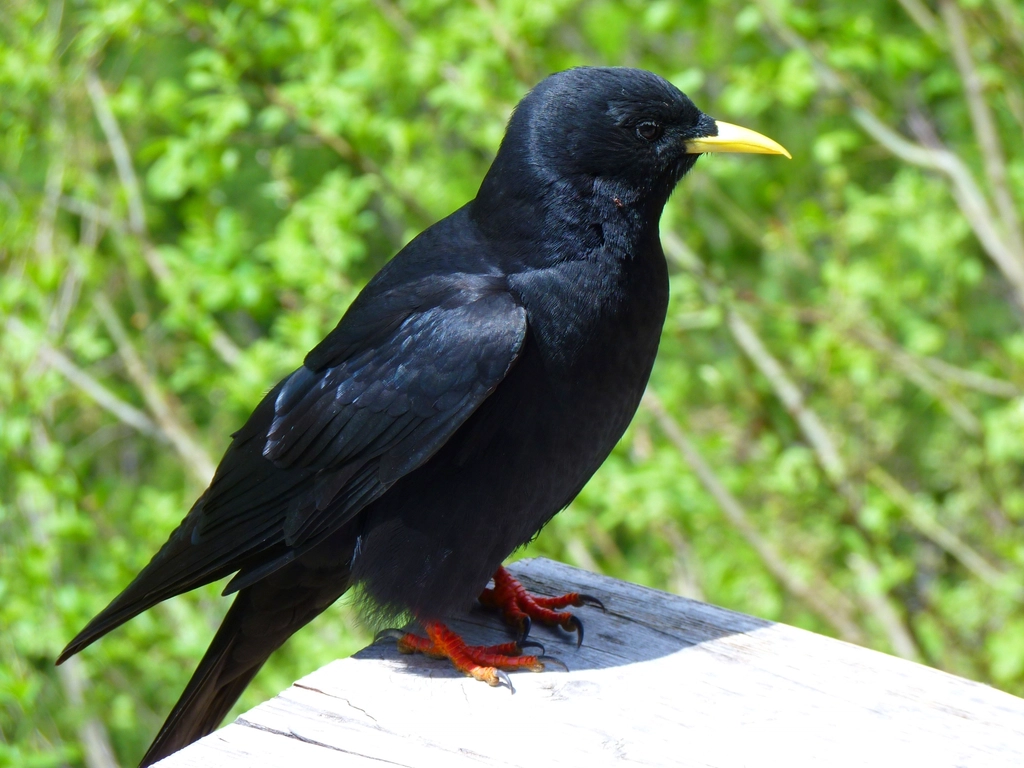
Corvids show that a large mammalian brain is not essential for complex thought. Ravens in experiments at Lund University were able to select tools they would need many hours later and plan future actions. New Caledonian crows make tools, and in experiments some have even managed to combine separate pieces to create a new, functional tool. Lund University
Then there is the octopus, perhaps the most ‘alien’ intelligence on the planet. Its nervous system has evolved independently of that of vertebrates for hundreds of millions of years, and a large proportion of its neurons are in its arms. The Biological Bulletin Octopuses have been observed carrying coconut shell halves and later using them as shelter — behaviour that has been described as tool use. ScienceDirect
The conclusion is perhaps more interesting than a simple ranking. Evolution did not create a single ‘ladder of intelligence’. It created different ways of solving problems.
Humans remain unique in their combination of language, abstract thought and culture. But dolphins, ravens and octopuses show that complex cognition can emerge through entirely different evolutionary paths.
Read also: What is the most intelligent animal after humans?
Discover more from Agora Περιοδικό
Subscribe to get the latest posts sent to your email.