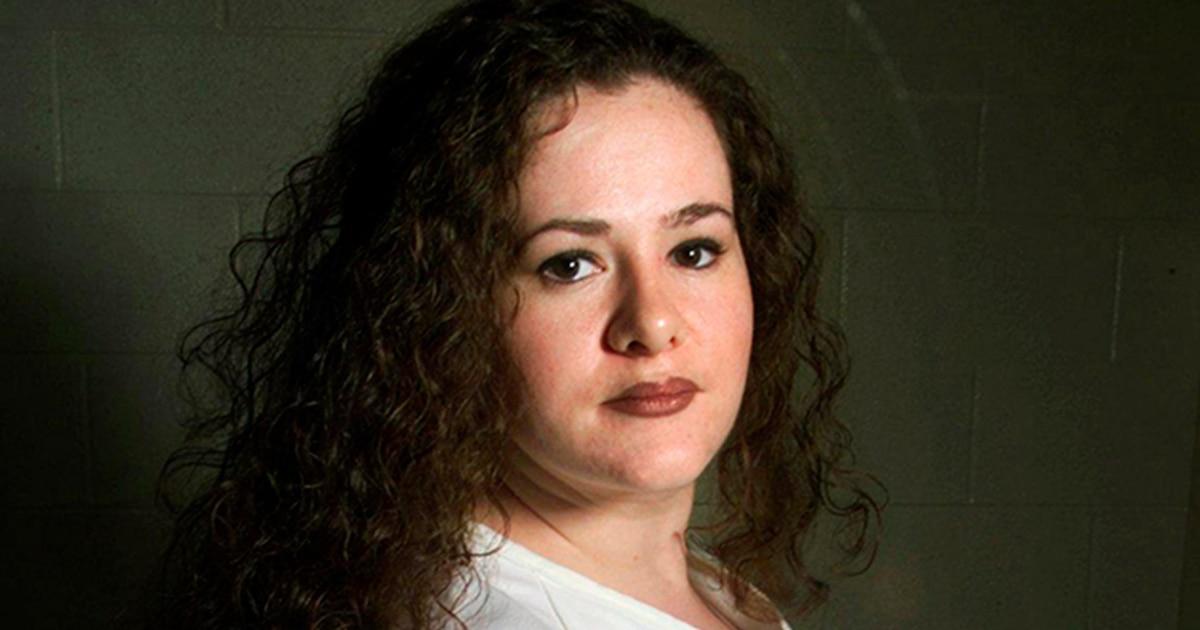
Christa Pike survived the failed attempt to execute her in Tennessee, recovered after several days in hospital and returned to prison on 10 October 2026. Her ordeal, however, is not over: the supposedly just US authorities have not pledged that they will refrain from trying to execute her again. The case has provoked strong reactions over the circumstances of the execution attempt and the treatment of a prisoner who survived it.
The case took an even more disturbing turn with revelations that emergency medical assistance was delayed because the request for an ambulance was reportedly initially treated as a false alarm.
From the execution chamber to hospital and back to prison
The execution was scheduled for 30 September 2026 at Riverbend Maximum Security Institution in Nashville, Tennessee. Pike, 50, had been sentenced to death for the murder of her 19-year-old classmate, Colleen Slemmer, in 1995.
Two doses of pentobarbital were administered during the lethal injection procedure, but Pike did not die. She was taken to hospital in critical condition, with serious health problems and injuries to her arms. At one point, her lawyers feared that she might be brain-dead.
Her condition gradually began to improve. She regained consciousness, began communicating and eating normally, and was able to walk with assistance. On 10 October she was discharged and returned to the Debra K. Johnson Rehabilitation Center in Nashville, where she has been held for more than three decades.
Her lawyers said she would continue receiving medical care in prison and that they would monitor her recovery. It has not been confirmed that her physical and cognitive functions have fully recovered.
Will they try to execute her again?
As of 13 October 2026, no new execution date had been announced, but there was also no guarantee that Pike would not face another attempt to kill her.
Tennessee Governor Bill Lee suspended the state’s remaining executions for 2026 and ordered an independent investigation into what happened. That suspension does not amount to commuting Pike’s death sentence to life imprisonment, nor does it permanently prohibit another execution attempt.
Her legal team is asking the governor to commute her sentence to life imprisonment without the possibility of parole so that the procedure cannot be repeated. Meanwhile, a Tennessee court ordered the preservation of evidence relating to the failed execution, paving the way for an investigation into responsibility.
Her lawyer Luke Ihnen has told the court that the authorities have given no guarantee that the state will not try to execute her again. Her future therefore remains legally uncertain.
Is she receiving psychological support?
Surviving physically does not mean that the psychological trauma has been overcome. According to reports in the Guardian and ABC News, Pike’s lawyers have described her as deeply traumatised by the experience. After regaining consciousness, she was reportedly angry and confused, struggling to maintain her train of thought and remember what she wanted to say.
Her lawyer Stephen Ferrell said that the need for psychological support was now clear and that she was experiencing significant psychological trauma. The available reports, however, establish that the defence team was seeking such support; they do not confirm that a specific, organised programme of psychological treatment has already begun in prison.
It also remains uncertain whether the effects on her memory and cognitive functions will be temporary or permanent.
The international community condemns inhumane treatment

The reaction has not been confined to the United States. The case prompted intervention from the United Nations. Before the failed execution, an official report by the Inter-American Commission on Human Rights had already identified serious violations of Pike’s rights.
– United Nations: UN High Commissioner for Human Rights Volker Türk called for there to be no further execution attempt. He described the prolonged physical and psychological suffering caused by repeated failed executions as abhorrent and cruel, and reiterated that the death penalty has no place in any society.
– Nine independent UN human rights experts: They called on the Tennessee authorities to commute Pike’s death sentence irrevocably, arguing that the two failed doses of lethal drugs constituted a flagrant violation of the prohibitions on torture and arbitrary deprivation of life.
– Inter-American Commission on Human Rights: In a report published on 24 September 2026, before the execution attempt, it found the United States responsible for violations of Pike’s rights, including those relating to a fair trial, equality before the law and her conditions of detention. The Commission noted that prolonged solitary confinement and shortcomings in her legal representation had serious consequences. It called for her sentence to be reviewed and commuted, and for her life and physical integrity to be protected.
The case has also reignited debate in the United States about capital punishment, execution methods and the reliability of the procedures. There is, however, no indication that the international outcry has so far led to a final decision to commute her sentence.
Christa Pike: nursing her back to health so they can execute her more effectively
New revelations about the delay in medical assistance
The incident is made even more serious by evidence that emerged from recordings of emergency calls.
According to the Associated Press and SigmaLive’s reporting, the first 911 call was made at 20:40, by which time more than an hour had passed since the execution procedure began. The caller was unable to provide the required verification code and, at 21:03, the report had allegedly been classified as a false alarm, with the result that medical assistance was not dispatched immediately.
About half an hour after the first alert, the authorities recognised that the incident was real. At around 21:11, emergency responders began to be allowed access to the prison grounds.
These details raise serious questions about how a medical emergency was handled at a facility where the state had just attempted to take a prisoner’s life. Responsibility for the delay and the circumstances of the failed execution remain under investigation.
The death penalty: the execution failed — let’s find a more effective way!
The crucial question: can the state try to execute her again?
Christa Pike’s case is highly unusual: according to the Death Penalty Information Center, it is the only known case in the modern era of US executions in which a prisoner survived after lethal drugs had been administered.
The case is about more than the failure of a medical procedure. It raises questions about whether a second attempt could be compatible with the constitutional prohibition on cruel and unusual punishment, as well as international obligations to protect human life.
Pike was convicted of a particularly violent crime. That does not remove the state’s obligation to act lawfully and protect human dignity, including the dignity of people sentenced to death.
For now, Pike is back in prison, receiving medical care and still facing a death sentence. Tennessee’s suspension of executions applies for the rest of 2026, while her legal team seeks to have her sentence commuted. The final outcome remains uncertain.
International reactions — Death Penalty Information Center
The Inter-American Commission on Human Rights report
Discover more from Agora Περιοδικό
Subscribe to get the latest posts sent to your email.