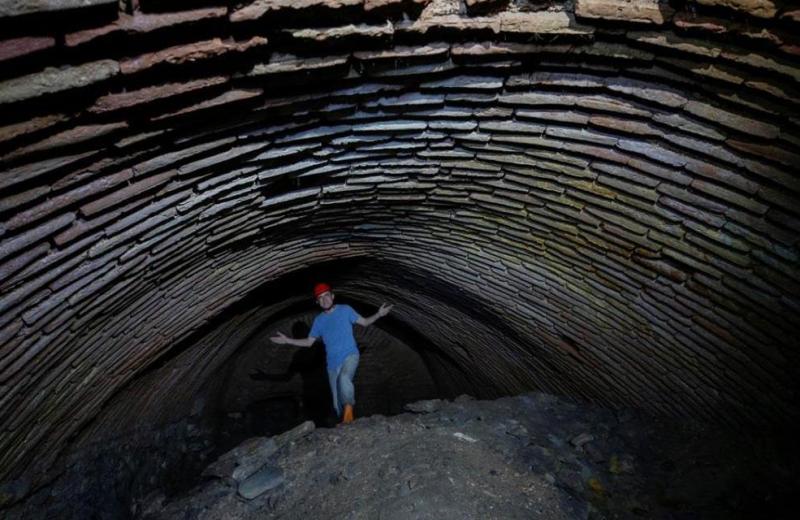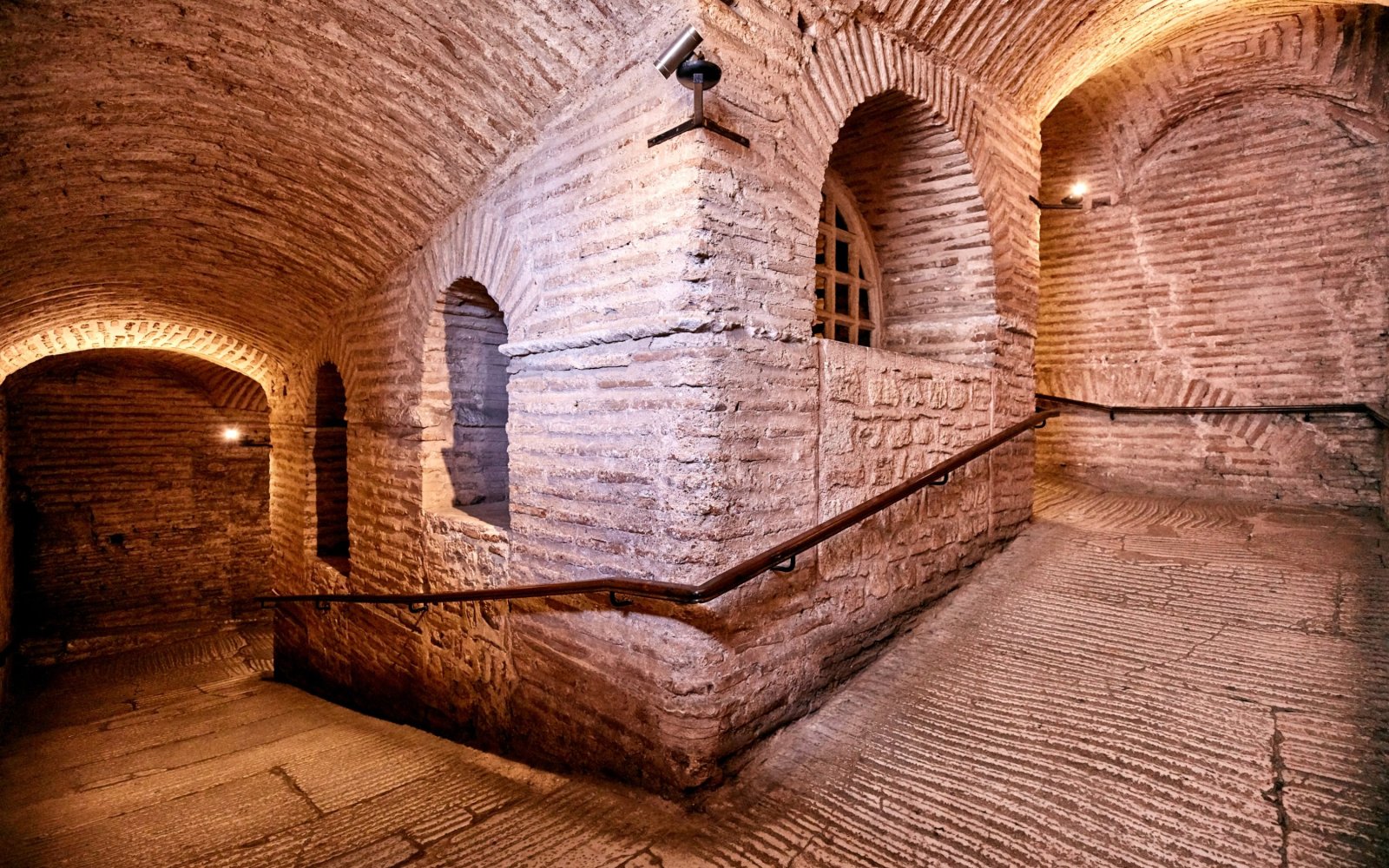

An extensive system of underground tunnels, passages and chambers beneath and around Hagia Sophia is at the centre of restoration work under way in Istanbul.
On 17 September, Turkey’s Minister of Culture and Tourism, Mehmet Nuri Ersoy, referred to an underground network that, according to some accounts, ‘extends to approximately nine kilometres’. He said teams were cleaning and restoring accessible sections, while other areas remained unreachable because of collapses and accumulated fill.
The minister also left open the possibility that some safe sections could eventually welcome visitors once the work has been completed.
Seven tunnel routes have already been documented
Information released in February by Turkey’s Ministry of Culture and Tourism was more specific. An official statement said that seven tunnel routes, measuring hundreds of metres in length, had been documented in Hagia Sophia’s western courtyard.
Large quantities of earth were removed from underground chambers and tunnels during the work. According to the ministry, more than a thousand tonnes of fill had been cleared from the seven tunnel routes alone.
What scientific research has established so far
The existence of underground structures at Hagia Sophia is not a new discovery. Their first systematic three-dimensional survey was carried out in 2020 by a research team led by architect and academic Hasan Fırat Diker.
The study, published in 2021 in Preservation, Digital Technology & Culture, documented approximately 936 metres of accessible underground structures. These included channels, passages, wells and underground spaces used, among other things, for the complex’s water supply, drainage and ventilation.
A later study by Diker records underground structures associated with different phases of the monument’s history: from an underground burial or ancillary chamber possibly dating to the fourth century to structures linked to the fifth-century Theodosian Hagia Sophia and Justinian’s sixth-century building.
The reference to nine kilometres is therefore a more recent estimate made public by the Turkish minister, rather than a fully mapped archaeological network. The continuing work may reveal how extensive Hagia Sophia’s underground system really is.
Discover more from Agora Περιοδικό
Subscribe to get the latest posts sent to your email.