
What were Hagia Sophia’s underground passages used for, and where did they lead? Renewed discussion of an underground system that may total around nine kilometres brings one of Istanbul’s great archaeological mysteries back into focus.
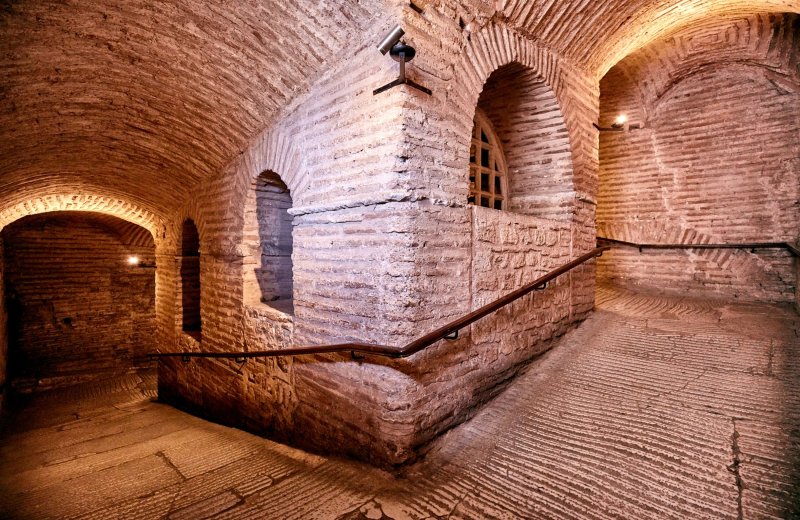
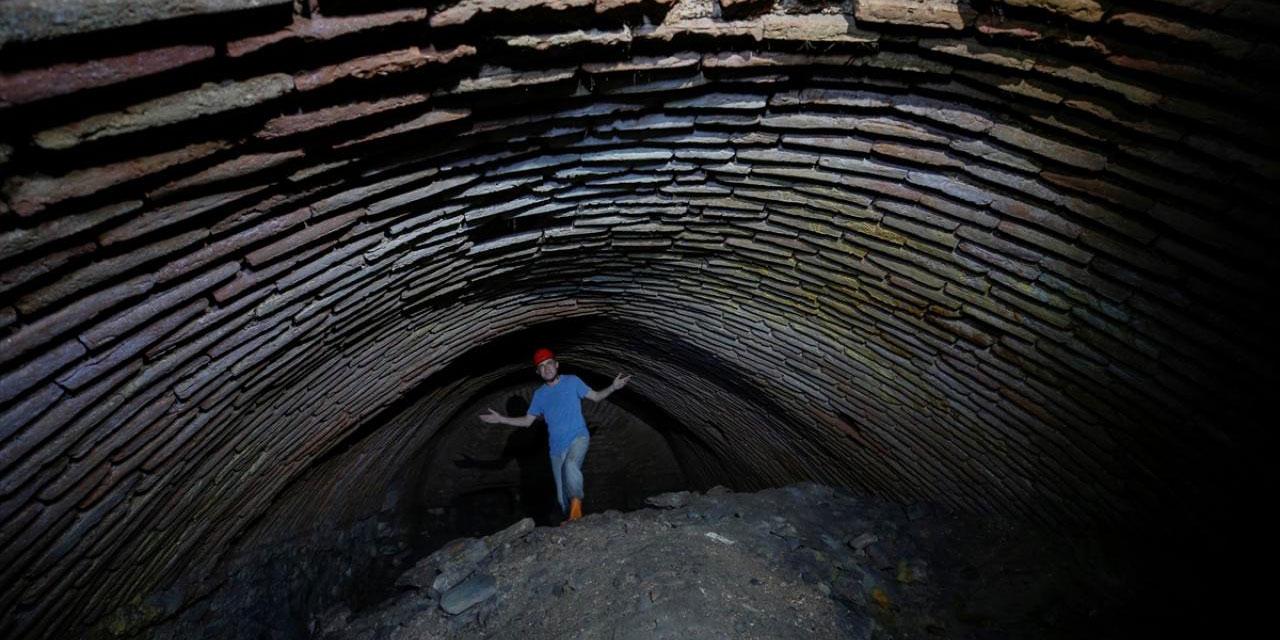
Scientists’ answer is that this is not one continuous secret tunnel. Beneath Hagia Sophia are structures from different periods with different functions: water-supply and drainage channels, wells, ventilation spaces, underground rooms, and passages large enough for people to move through.
Archaeologist Çiğdem Özkan Aygün, who has been investigating the ground beneath Hagia Sophia since 2005, recorded around one kilometre of underground passages in the area of the church. The research showed that much of the system served to supply and remove water.
Was there a passage to the Great Palace?
Some findings are particularly intriguing. Certain underground passages were large enough for human movement, and no water conduits were found in some of them. This leaves open the possibility that they served another purpose.
The same research team also recorded around 1,250 metres of underground channels beneath the present-day Topkapı area, where part of the Byzantine Great Palace once stood. Researchers are examining the relationship between Hagia Sophia’s underground system, the palace and the Hippodrome.
This does not prove that a secret tunnel connected Hagia Sophia to the palace, but it makes investigating possible connections scientifically reasonable.
New evidence emerged in 2025 and 2026. Cleaning the underground spaces beneath the old atrium revealed previously unknown structures and new connections, as documented in a study by Professor Hasan Fırat Diker in the journal Open Archaeology.
In February, Turkey’s Ministry of Culture announced that seven tunnel routes measuring hundreds of metres had already been documented and more than a thousand tonnes of fill removed.
Where do the nine kilometres end?
For now, nobody knows. The statement by Turkey’s Culture Minister Mehmet Nuri Ersoy concerns a total extent that may approach nine kilometres. Sections remain closed because of collapses, and no published map shows a continuous route to a specific destination.
Nor has any passage been proven to have served as an escape tunnel for the emperors.
The Marble Emperor
Istanbul’s mysterious underground world inevitably brings to mind Constantine XI Palaiologos. Yet no historical or archaeological evidence connects the last emperor with Hagia Sophia’s passages.
The legend of the Marble Emperor places him in an underground crypt near the Golden Gate, where, according to tradition, an angel hid him.
That is where archaeology ends and legend begins. The passages, however, are real, and much of their history remains buried.
They mainly served water supply, drainage and other functions of the complex, although some passages may also have been used for people to move through.
There is evidence that justifies investigating possible connections, but a continuous underground tunnel has not been proven.
No. This is a later folk legend with no known archaeological connection to Hagia Sophia’s passages.
Discover more from Agora Περιοδικό
Subscribe to get the latest posts sent to your email.