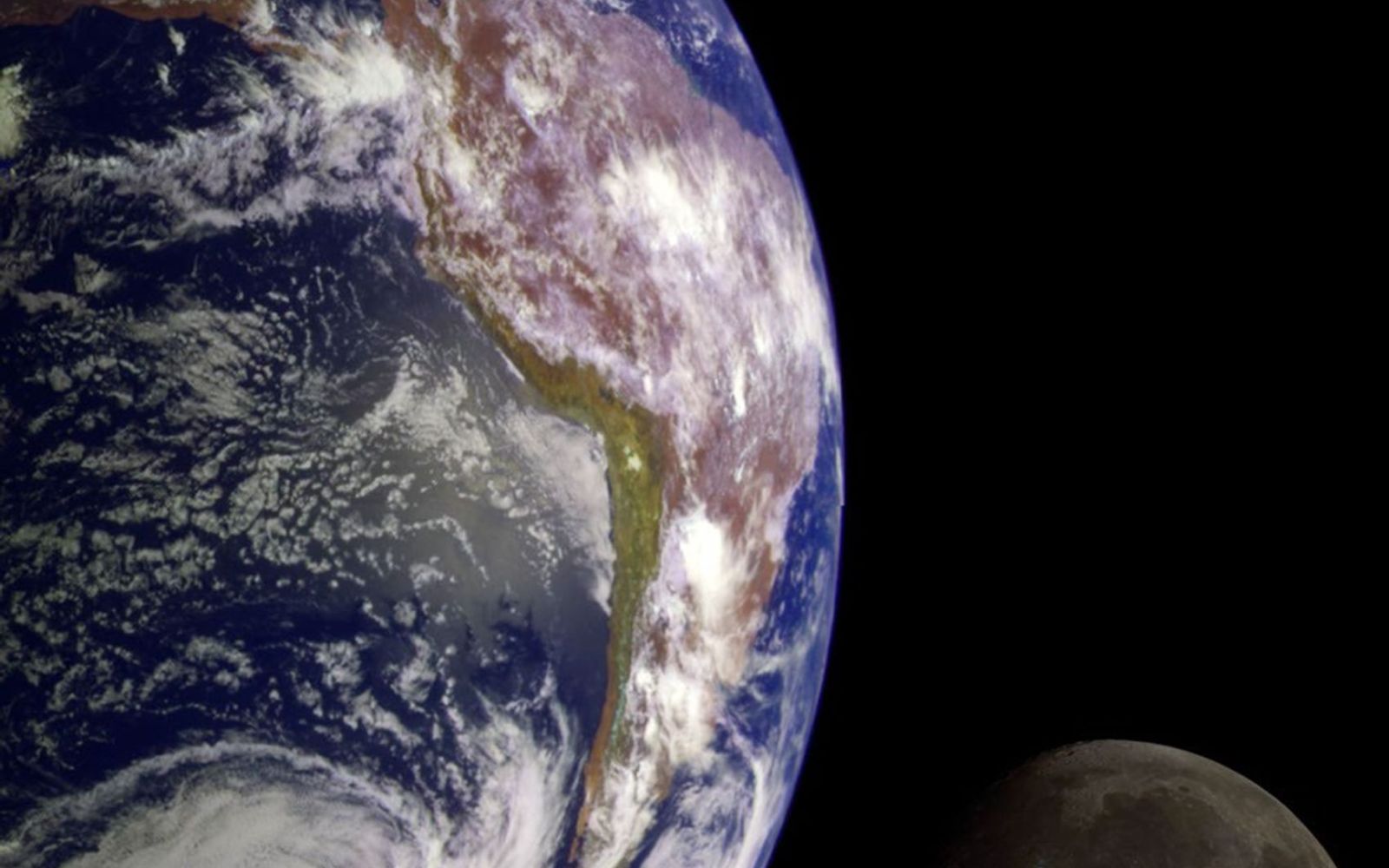

News reports and social media posts often describe small asteroids as Earth’s “second moons”. Most, however, are not true satellites. They simply follow orbits that keep them close to our planet for months or even decades.
The latest example is asteroid 2025 PN7. The Pan-STARRS 1 telescope in Hawaii detected it in August 2025, and a subsequent search uncovered earlier images of it. Astronomers Carlos and Raúl de la Fuente Marcos calculated that the small body has been accompanying Earth since the 1960s and will probably continue to do so until around 2083.
Why it is not a second Moon
2025 PN7 is about 19 metres in diameter. Although it moves in step with Earth, it orbits the Sun, not our planet. Scientists classify it as a quasi-satellite, or “quasi-moon”.
Its orbit takes about a year, just like Earth’s. From our viewpoint, this makes the asteroid appear to follow our planet. However, Earth’s gravity does not bind it in the way it holds the Moon.
Earth therefore still has one true natural satellite.
What is a real “mini-moon”?
Earth gains a mini-moon when its gravity temporarily captures a small asteroid. The body moves around Earth for a time and then returns to an orbit around the Sun.
This mainly happens with small asteroids travelling at relatively low speeds on orbits similar to Earth’s. The gravitational pull of the Sun, Earth and Moon constantly changes their paths. Temporary capture can therefore last a few months or several years.
NASA has clarified, however, that the much-discussed 2024 PT5 never entered an orbit around Earth. It remained nearby for a few months but continued on its path around the Sun. Analyses even suggest that it may be a piece of the Moon, ejected into space by an earlier impact.
Read also: The Three Gorges Dam affects Earth’s rotation and A landmark discovery about cloud formation.
Not with the naked eye or an ordinary amateur telescope. Its very small size and faintness require powerful equipment.
The available data do not indicate a collision risk. Astronomers monitor such bodies because their orbits help research into near-Earth asteroids.
Yes, at some point. Small asteroids frequently approach Earth, and some may briefly come under its gravitational influence.
Discover more from Agora Περιοδικό
Subscribe to get the latest posts sent to your email.